
Is Garage Door Insulation Worth It in Australia? A Complete Guide to Comfort, Savings, and Value

Home / Insights / Is Garage Door Insulation Worth It in Australia? A Complete Guide to Comfort, Savings, and Value
Picture of Peter Hinton
Peter Hinton

Peter is a licensed builder with over 45 years of experience in the construction industry. In 2012, his expertise in energy efficient construction inspired the invention of ThermaDoor Premium garage door insulation - the original purpose made garage door insulation in Australia.

Is Garage Door Insulation Worth It in Australia? A Complete Guide to Comfort, Savings, and Value

Is your garage extremely hot in the summer and a freezing cold in the winter? For many Australian homeowners, the garage is a source of frustration – a space that’s too uncomfortable to use for anything other than parking the car. But what if you could transform this neglected area into a comfortable, year-round living space while also slashing your energy bills? The solution is simpler than you might think: garage door insulation.
 
This guide will explore why investing in high-quality garage door insulation is one of the most cost-effective upgrades you can make to your Australian home. We’ll break down the significant benefits, from energy savings and increased comfort to noise reduction and a boost in your property’s value. We’ll also explain what to look for when choosing a product to ensure you get a solution that delivers real, measurable results.

The Top 6 Benefits of Insulating Your Garage Door

Beyond simply making your garage more comfortable, installing the right insulation offers a wide range of advantages that impact your entire home and lifestyle.

1. Slash Your Energy Bills with Improved Efficiency

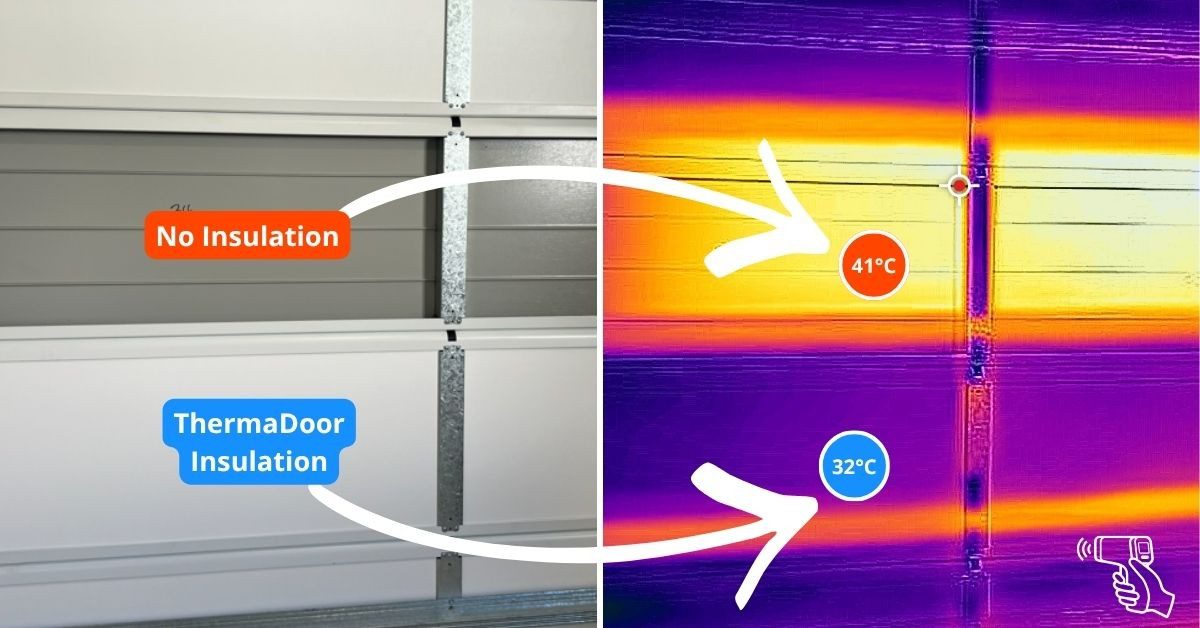
Heating and cooling account for around 40% of household energy use in Australia, making them the largest energy consumers in the average home [1]. A standard, uninsulated metal garage door is a major weak point in your home’s thermal shield, allowing heat to flood in during summer and escape during winter. This forces your air conditioner and heater to work overtime, driving up your energy bills.
 
By installing high-performance insulation, you can reduce heat transfer through the garage door by up to 90%. A well-insulated home provides year-round comfort while significantly cutting cooling and heating bills [2].

2. Reclaim Your Garage as a Year-Round Usable Space

Many Australian homeowners use their garage for more than just parking cars. It often serves as a home gym, a workshop, a kids’ playroom, or essential storage space. However, extreme temperatures can render the space unusable for much of the year.
Garage door insulation creates a stable, comfortable environment, allowing you to get the most out of your garage 365 days a year. Imagine working on your hobbies in comfort, having a dedicated space for the kids to play, or finally setting up that home gym you’ve been dreaming of.

3. Enjoy a Quieter, More Peaceful Home

Unwanted noise from traffic, neighbours, or weather can disrupt the peace and quiet of your home. Garage door insulation acts as a powerful two-way sound barrier, significantly reducing the amount of external noise that enters your home. It also helps contain noise within the garage, so you don’t have to worry about disturbing your family or neighbours.

4. Protect Your Car and Valuables

Extreme heat and cold can take a toll on your car’s battery, tires, and engine. Likewise, items stored in the garage – from tools and electronics to pantry goods and paint – can be damaged by temperature fluctuations and moisture. A well-insulated garage provides a stable environment that protects your valuable possessions from damage.

5. Boost Your Property Value

An insulated garage is a highly sought-after feature for potential homebuyers. It signals a well-maintained, energy-efficient home and adds a versatile, usable living space. This smart investment not only improves your quality of life but can also significantly increase the resale value of your property.

6. Achieve a Sleek, Professional Finish

Beyond the practical benefits, quality insulation panels give the inside of your garage door a clean, professional, and finished look. This enhances the aesthetic of the space, making it feel more like a true extension of your home.

The R-Value Myth: What Most Insulation Brands Don't Tell You

When researching insulation, you will inevitably come across the term ‘R-value,’ which measures a product’s resistance to heat flow. The higher the R-value, the better the thermal performance. However, under Australian Standards AS/NZS 4859.1 & 4859.2:2018, R-values must be calculated and declared as assembly values – meaning they measure the performance of the entire installed system, not just the material in isolation.
 
Here is where most garage door insulation products fall short. Many brands sell repurposed wall or ceiling insulation and simply quote the R-value from those wall or ceiling tests. Others advertise a ‘material’ or ‘standalone’ R-value, which only reflects the insulation’s performance in a laboratory, on its own. Neither of these numbers account for the unique realities of a metal garage door.
 
A garage door is fundamentally different from a wall or ceiling. It has thin steel skins that conduct heat, it moves constantly, it has air gaps around the perimeter, and it is exposed to intense solar radiation. These factors – thermal bridging, air leakage, and radiant heat gain – significantly change how insulation performs. Wall, ceiling, or material R-values simply do not translate to a thin, moving, steel door, and using these numbers can drastically overstate the real-world performance you will actually experience.
 
At ThermaDoor, we believe in transparency and accuracy. We are the only brand in Australia that provides independently tested and verified assembly R-values calculated specifically for garage doors by qualified thermal engineers. We also publish dual-season R-values – R1.48 (winter) and R1.43 (summer) – because heat flows differently in different seasons, and a single number cannot accurately represent year-round performance.
 
This is not just marketing. It is a commitment to giving you the real information you need to make an informed decision. For those who want to dive deeper into the science and understand why this matters, you can learn more in our detailed guide to .

What to Look for When Choosing Garage Door Insulation

When comparing your options, it’s important to look beyond a single R-value number. Here are the key factors that separate a high-quality, long-lasting solution from a quick fix:
 
Purpose-Built Design: Is the product specifically designed for garage doors? Many products are simply repurposed wall insulation, which may not be suitable for the weight, movement, and conditions of a garage door.
 
Australian-Made for Australian Conditions: Australia’s climate is unique. Look for a product that is made in Australia and engineered to withstand our harsh summers and cool winters.
 
Verified Performance: Don’t rely on marketing claims. Choose a brand that provides independently tested and verified performance data for a complete garage door assembly.
 
Quality Materials: The best solutions use a multi-layer system, often combining a rigid insulation core with a durable, easy-to-clean finish and a reflective backing for maximum thermal performance.
 
Installation Options: Does the company offer both professional installation and easy-to-use DIY kits? This gives you the flexibility to choose the option that best suits your budget and skills.

The Smart Investment: Cost vs. Value

While there is an upfront cost to installing garage door insulation, it’s important to view it as a long-term investment. The money you save on your energy bills can quickly offset the initial cost, and the added comfort and usability of your garage are invaluable.
Prices for a standard 16 panel DIY kits in Australia typically range from $300 to $900, depending on the size of your door and the quality of the product. Professional installation will cost more but ensures a perfect fit and finish. When you consider the year-round energy savings and the significant boost to your property’s value, garage door insulation offers an excellent return on investment.

The Verdict: Is It Worth It?

For Australian homeowners looking to improve their home’s comfort, reduce their energy bills, and add usable living space, the answer is a resounding yes. High-quality garage door insulation is a smart, cost-effective upgrade that delivers tangible benefits for years to come.
By choosing a purpose-built, Australian-made solution with proven, real-world performance, you can transform your garage from a neglected space into a valuable and comfortable part of your home.
Ready to unlock the full potential of your garage? Contact ThermaDoor today for a free, no-obligation quote and discover why we are Australia’s most trusted name in garage door insulation.

Frequently Asked Questions (FAQs) about Garage Door Insulation

1. Is garage door insulation worth it in Australia?

Yes, absolutely. For most Australian homes, garage door insulation is one of the most cost-effective upgrades you can make. It significantly improves your home’s thermal efficiency, which can cut your heating and cooling bills. It also transforms your garage into a comfortable, usable space year-round and can increase your property value.

The cost varies depending on the size of your door and the quality of the product. A DIY kit for a standard 16-panel sectional door typically ranges from $300 to $900. Professional installation will cost more but ensures a perfect fit and finish. While there is an upfront cost, the year-round energy savings often provide a strong return on investment.

Yes, when you use the right product. A standard uninsulated metal garage door can act like a giant radiator, transferring heat into your home in summer and letting it escape in winter. High-quality, purpose-built insulation can block up to 90% of this heat transfer, making your garage and adjacent rooms noticeably more comfortable.

Yes. Most quality insulation products, like ThermaDoor, are designed to be retrofitted to existing sectional and tilt garage doors. The process is straightforward and can be done as a DIY project or by a professional installer.

Instead of focusing on a single R-value number, you should look for an assembly R-value that has been independently tested for a garage door. Under Australian Standards (AS/NZS 4859.1 & 4859.2:2018), this is the true measure of performance. ThermaDoor provides verified assembly R-values of R1.48 (winter) and R1.43 (summer), which are the highest on the market for Australian garage doors.

A typical DIY installation on a standard sectional door takes around 2-3 hours. A professional installer can often complete the job even faster. It’s a project that can easily be completed in an afternoon.

Yes. The added layer of insulation acts as a sound barrier, which can significantly reduce noise from traffic, wind, and rain. It also helps to contain noise within the garage, making it a great solution if you use your garage as a workshop or home gym.

Not necessarily. Many products are designed for easy DIY installation and come in kits with everything you need. However, after installing the insulation, the added weight (around 7kg for a standard door) will require the garage door springs to be re-tensioned. For safety, it is highly recommended that you hire a qualified garage door technician to perform this spring adjustment.

No, as long as the springs are adjusted correctly. Purpose-built insulation panels are extremely lightweight. Once the door springs are re-tensioned by a professional to account for the minor weight difference, your door and motor will operate smoothly without any added strain.
Material R-value measures the insulation’s performance in a lab, on its own. This is what most repurposed wall or ceiling insulations advertise, and it doesn’t reflect real-world performance on a garage door.
 
Assembly R-value measures the performance of the entire garage door system once the insulation is installed. This is the only accurate measure under Australian Standards, as it accounts for factors like thermal bridging from the steel door, air gaps, and solar heat gain.

References

Reference [1]: Energy Rating (Australian Government)
Reference [2]: YourHome (Australian Government )
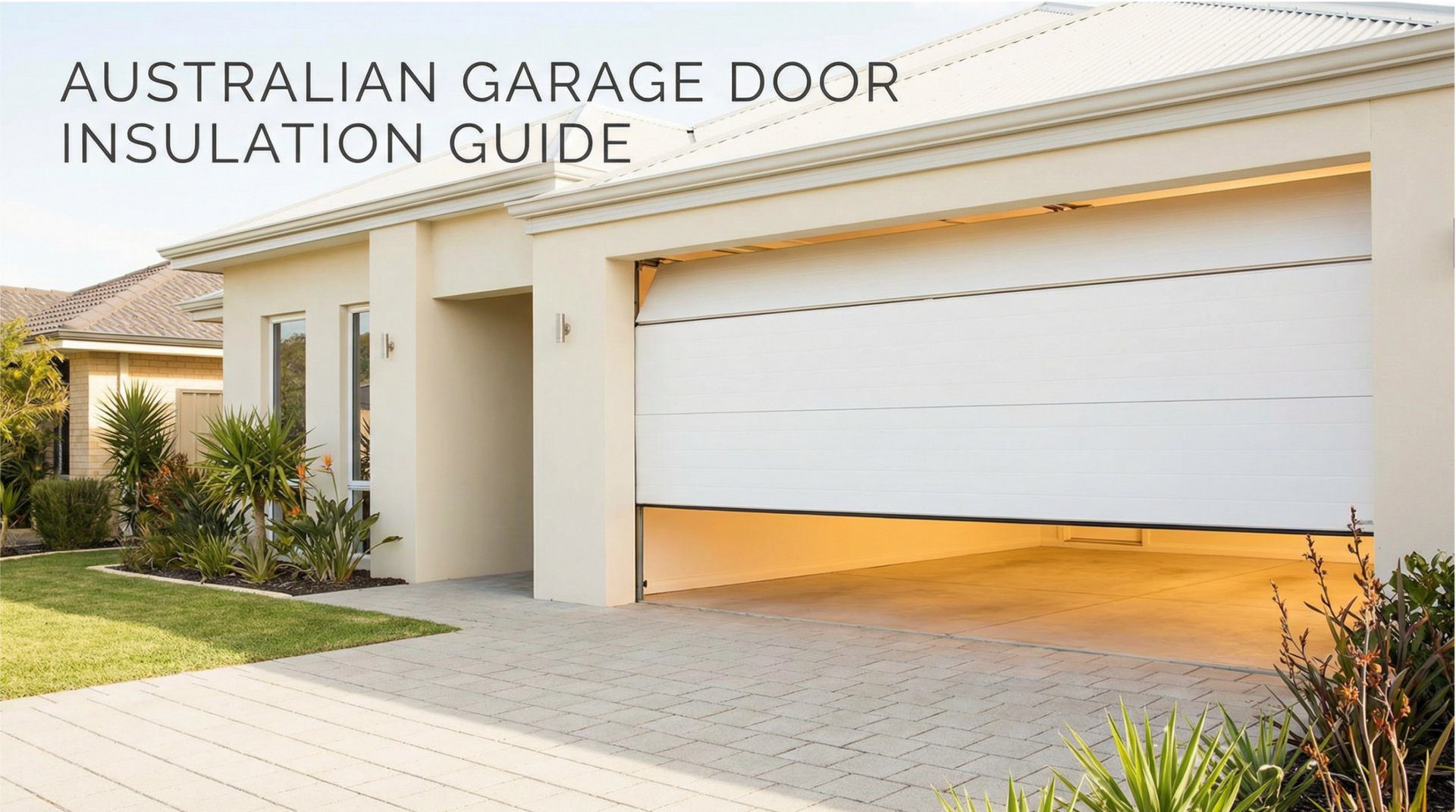
A modern Australian home with a partially open sectional garage door, showing the premium white insulated panels inside. The image represents a guide to whether garage door insulation is worth it.

ThermaDoor Installation

Let our experts handle installation for you
Or Ask Us A Question

Call, text, or send an enquiry below to see if we have an installer in your area.

Make an Enquiry