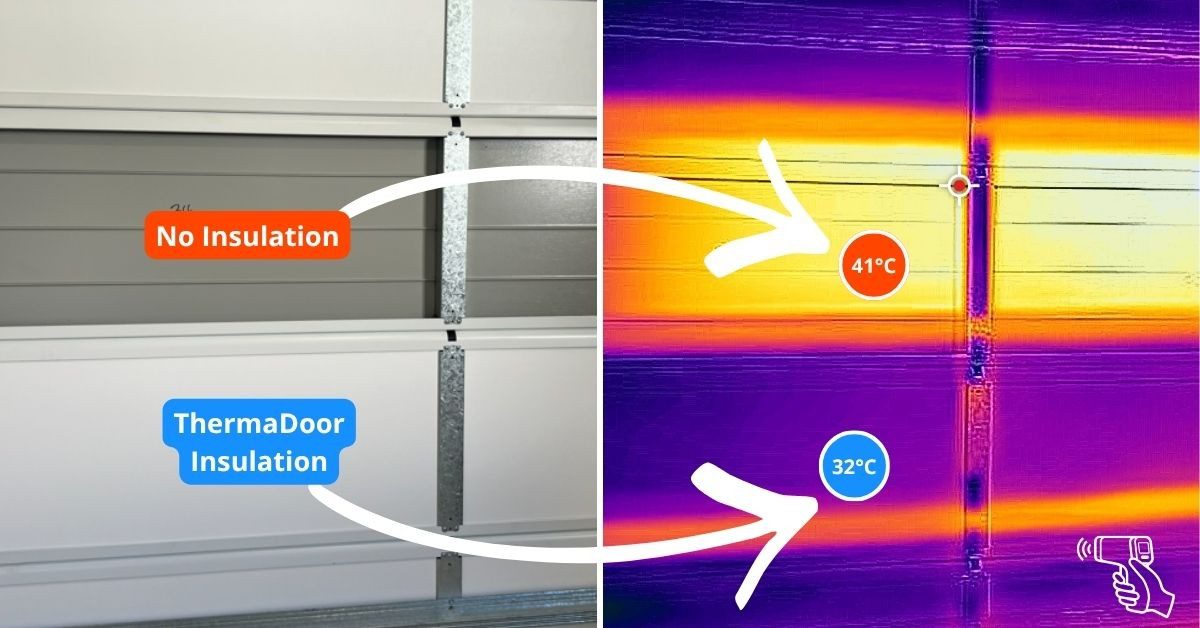
If you’re trying to improve comfort, reduce heat, and keep your garage cool in summer in Australia, the right garage door insulation can make a dramatic difference. But with so many installers and DIY kit options now appearing online, it can be difficult to know which solutions genuinely perform — and which are just quick cosmetic fixes.
With NCC 2025 now released, assembly R-values are more important than ever. Read our NCC 2025 guide.
Before choosing insulation for a sectional or tilt garage door, here’s how to compare garage door insulation options properly to ensure long-term performance, safety and value.
Before comparing options, you might be wondering if garage door insulation is even worth it.
A garage door moves, flexes, vibrates and carries motor load — so it requires insulation engineered specifically for panel lift or tilt doors, not wall or roof insulation being repurposed.
Key questions:
Is the product designed specifically for garage doors?
Has it been engineered for movement, vibration and daily cycling?
Is it lightweight enough to protect the door motor and springs?
If the product isn’t purpose-built for garage doors, performance and safety can be compromised.
Real thermal performance is measured using R-values, verified under AS/NZS 4859.1 & 4859.2.
Surface temperature readings taken with a thermal gun don’t measure insulation performance – they only show momentary skin temperature.
Key questions:
Are R-values independently verified to Australian Standards?
Are R-values published for the actual garage-door assembly, not just the raw material or ‘standalone’ product?
Can documentation be provided?
If a product advertises huge temperature drops but no R-value, it’s usually marketing spin.
Some installers glue insulation panels directly onto the metal garage door. This might look neat initially, but it:
Removes the essential air cavity needed for real thermal performance
Adds weight to the door and strains the opener
Can void manufacturer warranties
Risks delamination or falling panels
Best-practice installation uses mechanical fixing and preserves the air gap, aligning with AS 3999 installation standards.
Key questions:
Is the insulation mechanically fixed or glued?
Does the system preserve the air gap?
Will the installer adjust the springs to safely rebalance the door?
Garages on the Gold Coast, Brisbane, Perth, Darwin and coastal regions face extreme heat and humidity. Moisture-absorbent insulation materials can degrade, bow, or affect performance over time.
Key questions:
Is the insulation moisture-resistant?
Has it been tested for Australian heat and humidity?
Is it safe for coastal environments?
Look for systems designed specifically for Australian climate conditions.
A garage is a high-traffic storage and activity zone. Real-world performance includes impact resistance and appearance.
Key questions:
Does the product have a durable but light weight laminated vinyl finish?
Will it resist dents, damage, pets and general wear?
Does it improve the internal appearance of the garage?
Before choosing any garage door insulation in Australia, confirm:
| Requirement | Why it matters |
|---|---|
| Purpose-built for garage doors | Safely handles movement & motor load |
| Verified R-values | Real thermal performance, not guesswork |
| Mechanically fixed (not glued) | Preserves air gap & protects door |
| Lightweight & motor-safe | Prevents opener strain & damage |
| Air cavity maintained | Maximises insulation performance |
| Tested for Australian climate | Withstands heat & humidity |
| Professional balancing | Safe operation & warranty protection |
The right garage door insulation can significantly reduce heat transfer, improve ambient temperatures and make your garage usable in summer – but only when the system is purpose-built, independently tested and installed correctly.
Taking a few minutes to ask the questions above can protect your investment and ensure you get the performance you’re paying for.
Before you make a final decision, download our free Buyer’s Checklist — it covers the 5 questions every buyer should ask before purchasing garage door insulation.
Start by checking whether the product is purpose-built for garage doors, not just wall or roof insulation being repurposed. Look for independently verified R-values, a mechanically fixed system that keeps an air gap, and information about how it performs in Australian heat and humidity. You should also confirm that installation includes spring adjustment and door balancing for safe operation.
R-values measure how well insulation resists heat flow. Higher R-values mean better thermal performance. In Australia, genuine performance should be verified to AS/NZS 4859.1 & 4859.2, and provided for the whole garage-door assembly, not just the raw material. If a product only talks about “temperature drop” without R-values, it’s difficult to compare or trust the performance.
Yes, it can be. Gluing insulation straight onto the metal skin removes the air cavity that helps create real thermal resistance, can add unnecessary weight, and may void door or motor warranties if springs are not adjusted. A mechanically fixed system that preserves an air gap and protects the door structure is generally a safer and more effective approach.
It should be. Garages in Australia face high temperatures, humidity and coastal conditions, so the insulation needs to be suitable for those environments. Products not designed for local conditions may absorb moisture, bow, or lose performance over time. Look for systems specifically described as tested for Australian climate.
Yes. Even lightweight insulation changes the load on the door. Springs must be correctly tensioned and the door balanced to prevent motor strain, safety issues and potential warranty problems. A proper installation should include spring adjustment and safety checks as part of the service.
Australian Building Codes Board (ABCB) — Housing Energy Efficiency Handbook (PDF) — covers insulation requirements for attached garages. (Australian Building Codes Board)
[Housing Energy Efficiency Handbook – ABCB]
Your Home (Australian Government) — “Insulation (materials & standards)” page. Explains R-values, AS/NZS 4859 standard etc. (YourHome)
Queensland Building and Construction Commission (QBCC) — Standards and Tolerances Guide (Queensland) — covers building standards relevant to domestic work. (QBCC)
Business Queensland — “7-Star Energy Standard for Houses & Townhouses” page — discusses new home energy rating including attached garages. (Business Queensland)
Nationwide House Energy Rating Scheme (NatHERS) — NatHERS for existing homes Technical Note v20250611 — mentions inputting garage door insulation when applicable. (nathers.gov.au)

Peter is a licensed builder with over 45 years of experience in the construction industry. In 2012, his expertise in energy efficient construction inspired the invention of ThermaDoor Premium garage door insulation - the original purpose made garage door insulation in Australia.
ThermaDoor is the manufacturer of the products discussed in this article and has a commercial interest in their sale. While every effort has been made to ensure the accuracy of the information presented, readers are encouraged to conduct their own research and consult qualified professionals before making purchasing decisions. All R-values cited are independently verified assembly R-values under AS/NZS 4859.1/.2:2018.
Call, text, or send an enquiry below to see if we have an installer in your area.
"*" indicates required fields