
Peter is a licensed builder with over 45 years of experience in the construction industry. In 2012, his expertise in energy efficient construction inspired the invention of ThermaDoor Premium garage door insulation - the original purpose made garage door insulation in Australia.
A garage door is not a static wall. It is a dynamic, moving structure that flexes, bends, and vibrates every time it opens and closes. This fundamental difference in application exposes the primary weakness of using construction-grade PIR as garage door insulation.
The R-value is the standard measure of thermal resistance — the higher the number, the better the insulation. Comparing R-values is the only way to accurately judge insulation performance. It is like comparing shoe sizes before buying shoes. Misquoting or omitting R-values deprives consumers of the ability to make an informed decision.
| Feature | ThermaDoor | PIR Systems |
|---|---|---|
| Design Intent | Purpose-built for garage doors | Designed for static roofing/walls |
| Mechanical Properties | Flexible, impact-resistant | Rigid, brittle under tension |
| Weight (Double Door) | 7–8kg | 11–15kg+ |
| R-Value Reporting | Verified Assembly R-Value | Theoretical Material R-Value |
| Moisture Control | Class 2 vapour barrier | Foil-faced large surfaces, open cut edges |
Want to know more about graphite garage door insulation? Explore our article Graphite Garage Door Insulation: The Honest Facts
PIR (Polyisocyanurate) is a rigid foam designed for static commercial construction applications such as roofing and wall sheathing. It was not engineered for the dynamic, flexing environment of a garage door. Its mechanical brittleness, moisture sensitivity in high-humidity conditions, and reliance on material R-values rather than verified assembly R-values make it a poor fit for this application.
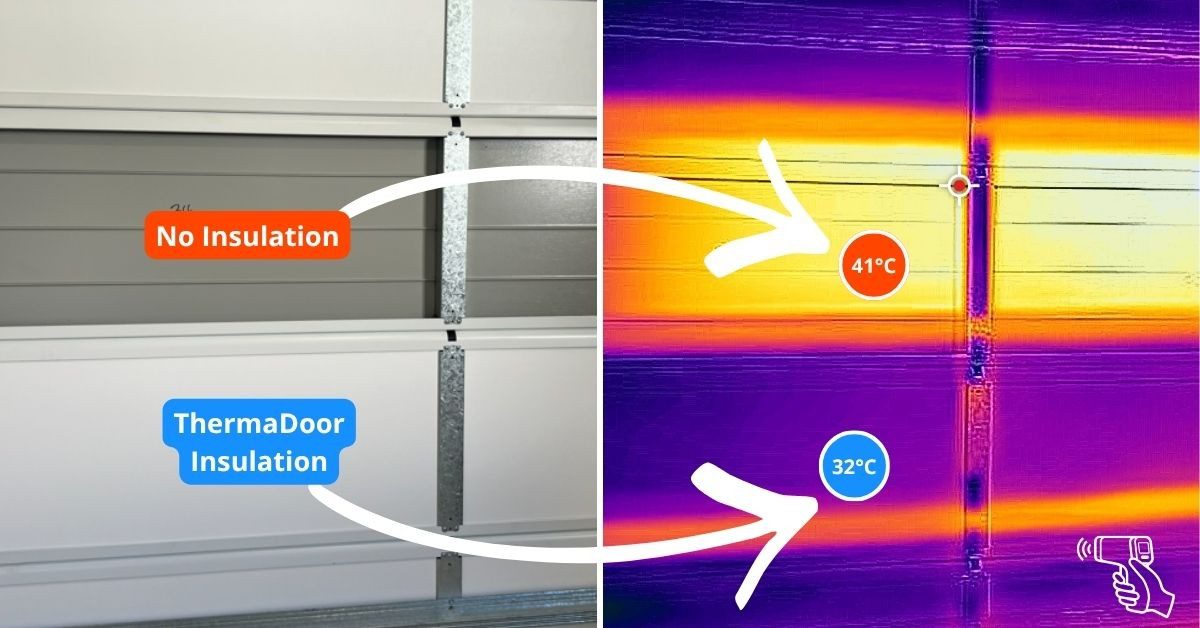
A material R-value measures the thermal resistance of a foam board in isolation, in a laboratory. An assembly R-value measures the thermal performance of the entire door system, including the steel frame, hinges, and panel gaps that act as thermal bridges. For garage doors, only the assembly R-value reflects real-world performance. Always ask for an independent engineering report tested to AS/NZS 4859.2:2018.
PIR foam manufacturers explicitly state in their technical datasheets that special precautions must be taken in conditions of water vapour condensation and high relative humidity. A steel garage door in the Australian climate cycles between extreme heat and cooler temperatures daily, creating exactly these conditions. PIR garage door kits do not include the vapour management systems required to address this risk.
Based on published Australian PIR foam density specifications of 45 kg/m³, a standard 16-panel double garage door kit using 35mm PIR panels weighs approximately 14kg or more. Some products claim weights as low as 11kg, which is only achievable at minimum density and minimum thickness simultaneously. Excess weight places additional strain on garage door springs and may require professional rebalancing.
No. Claims that R-value increases when PIR is installed inside a steel frame are not supported by building physics. Steel is highly conductive and acts as a thermal bridge, which reduces the effective thermal resistance of the assembly compared to the material value tested in isolation. An independent engineering report is the only way to verify actual assembly performance.
A Class 2 vapour barrier is a material that limits the passage of water vapour through an assembly. In a garage door context, it prevents moisture from condensing inside the insulation panel, which can degrade performance and cause long-term damage. ThermaDoor’s sisalation foil backing is certified as a Class 2 vapour barrier, providing engineered moisture management that repurposed PIR kits do not offer.
Ask for the independent AS/NZS 4859.2:2018 assembly R-value test report. Ask whether the product was designed specifically for garage doors or adapted from another application. Ask how moisture and condensation are managed. Ask for the verified installed weight. If a supplier cannot provide documented answers to these questions, that is important information. Download the ThermaDoor Buyers Checklist for the complete list of questions to ask.
Call, text, or send an enquiry below to see if we have an installer in your area.
"*" indicates required fields